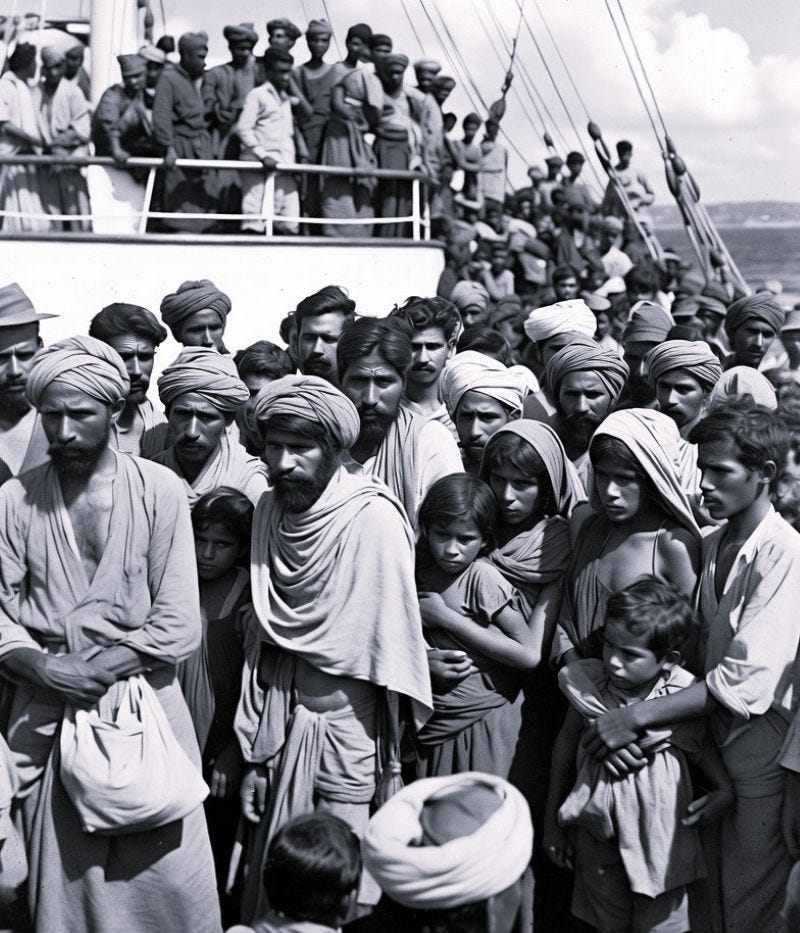
The sun hung low over the Hooghly River in Calcutta, casting a golden shimmer on the bustling docks where hundreds of men, women, and children gathered, clutching small bundles of cloth that held their few possessions. It was the late 19th century, and for these villagers from northern India—many from the fields of Bihar and Uttar Pradesh—Calcutta (now Kolkata) was the busiest gateway to an uncertain future.
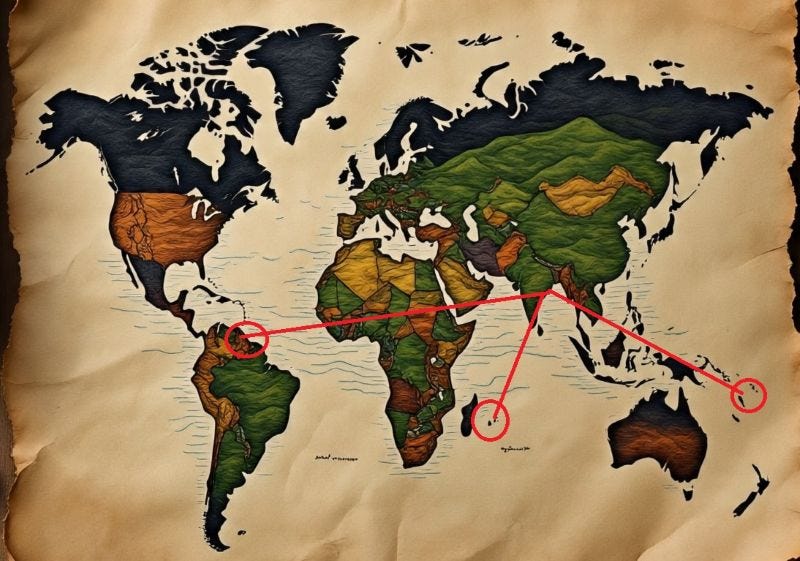
Departure Ports and Destinations of Indentured Laborers
Calcutta served as the primary hub, especially for recruits from the north, while Madras (now Chennai) drew people from southern regions, carrying the accents and traditions of Tamil and Telugu lands. Bombay (now Mumbai), though less frequently used, still contributed a steady flow from western India. These three great ports—Calcutta, Madras, and Bombay—were the departure points for over a million souls between the 1830s and early 1900s. From the crowded decks, they watched the Indian coastline fade away, setting sail across vast oceans to distant colonies. The earliest and largest groups arrived in Mauritius, its sugar fields stretching green under the tropical sun. Others stepped ashore in Fiji’s distant islands, the humid lowlands of Trinidad and Tobago, the vast estates of British Guiana (now Guyana), the Dutch colony of Suriname, the cane fields of Natal in South Africa, Jamaica’s plantations, and smaller numbers in Réunion, Guadeloupe, Martinique, and beyond.
The Harsh Reality of the Voyages
The sea journey lasted three to four months on average, often routing around the Cape of Good Hope. Life below decks was harsh and confined. Hundreds packed into dim, poorly ventilated holds, sleeping on wooden planks or thin mats, with little space to move. Food—rice, dhal, and occasional vegetables—was meager and often spoiled by heat and damp. Disease spread quickly: cholera, dysentery, scurvy from malnutrition, and fevers took hold in the early years.
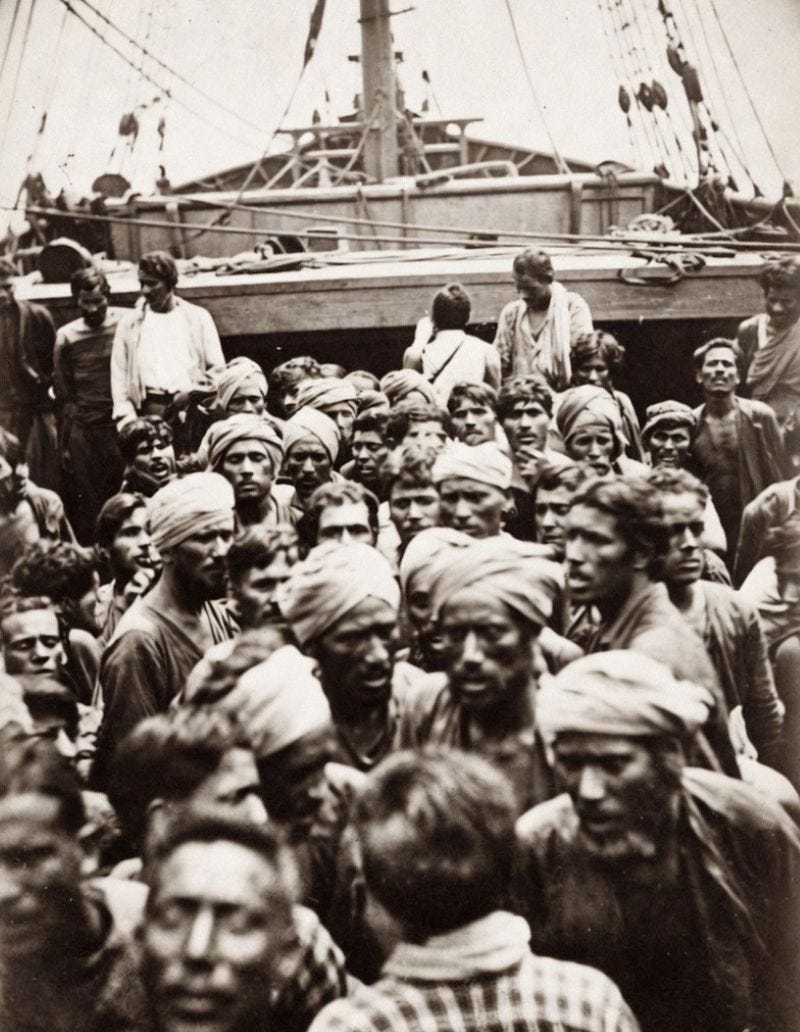
On some initial voyages, mortality soared above 17%, leaving families grieving as bodies were committed to the sea. Storms tossed the wooden sailing vessels violently; children cried through nights of fear; elders whispered prayers to calm trembling hearts. The trauma of leaving home—of crossing the mighty ocean, the dark waters that many believed broke caste and ties forever—hung heavy in the air.
Yet regulations gradually tightened. More space per person, better sanitation, medical officers on board, and stricter inspections brought death rates down in later decades. Still, the voyage remained a trial of endurance, a liminal space between the known world left behind and the unknown one ahead.
Life Under Indenture: Contracts, “Girmit,” and “Coolies”
They had signed papers—called girmit in the Bhojpuri tongue many spoke, a village pronunciation of “agreement”—binding them usually to five years of labor. Promises were made: wages, basic housing, food rations, and, at the end, a return passage to India. In the ledgers of the time, they were often recorded simply as “coolies,” a word that began neutrally but soon carried the sting of contempt.
The work was grueling—cutting cane from dawn to dusk under a relentless sun, weeding, planting, hauling loads—but many endured. When the five years ended, a surprising number chose not to return. They stayed, married, built homes, raised children, and wove Indian customs—festivals, food, language, music—into the fabric of new lands. Over generations, vibrant communities took root: Indo-Caribbean rhythms in Trinidad and Guyana, Indo-Fijian villages echoing with bhajans, Indo-Mauritian temples rising beside sugarcane fields, Indo-South African neighborhoods preserving old recipes and stories.
Surviving Records of Indentured Laborers
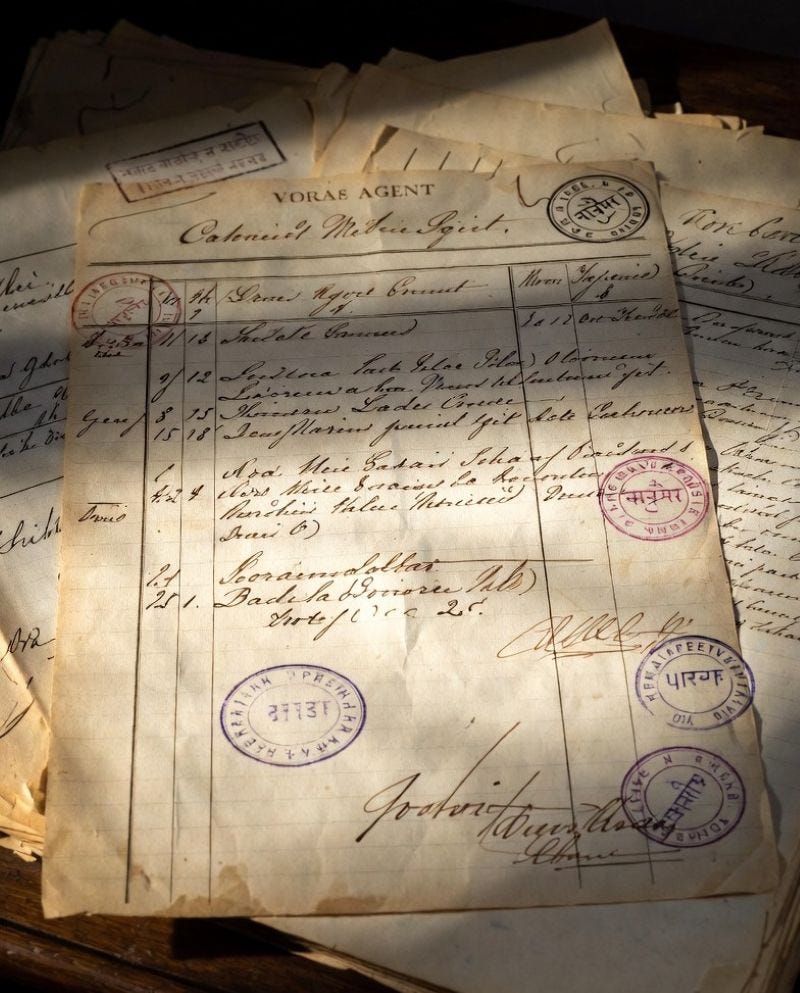
Today, the human scale of those journeys lives on in fragile, yellowed papers preserved across oceans. Ship manifests list every name, age, and village of origin. Indenture contracts bear thumbprints where literacy was rare, in place of signatures. Medical certificates note health upon arrival; plantation registers track tasks and payments.
These documents—now recognized by UNESCO as part of the Memory of the World Register for major collections from Fiji, Guyana, Trinidad and Tobago, Suriname, and others—are digitized in national archives and special projects like South African Indian Routes. They are more than records. They are bridges to ancestors who crossed the world in search of survival, who faced separation and hardship, yet whose resilience gave rise to rich, blended cultures that still thrive. For descendants tracing family lines or historians piecing together the colonial labor system, these archives remain irreplaceable—quiet testaments to lives that statistics alone could never capture.